Modified Bitumen Installation by ARCM Roofing
SBS and APP multi-ply systems for flat and low-slope roofs — redundant plies, four application methods, and torch discipline that takes fire risk seriously.
5 Highlights on Modified Bitumen
Redundant Plies for Roofs That Work Hard
The multi-ply workhorse of flat roofing — where TPO and EPDM offer single-ply speed, mod-bit answers with thickness, redundancy, and repairability.
Multi-Ply Redundancy
Two-and-three-ply systems layer base, interply, and granulated cap sheets — if one ply is compromised, the assembly still sheds water.
Four Application Methods
Torch-down, cold-process, hot-mop, and self-adhered — chosen by occupancy, fire code, and substrate, not by habit.
SBS Flex or APP UV Armor
SBS rubber-modified sheets flex through freezing nights; APP plastic-modified caps shrug off high-altitude UV.
Puncture Strength for Trafficked Roofs
Polyester and fiberglass scrims deliver tear resistance single-ply can't match under rooftop equipment traffic.
CERTA Torch Discipline
Torch-certified protocols, staged extinguishers at every station, and dedicated fire watches after each workday.
Bleed-out at every seam — visible proof of full adhesion.
Why Choose Us
Torch-Certified, Honestly Scoped
Torch application carries real fire risk, and we treat it that way: crews follow CERTA torch-safety protocols, extinguishers stage at every torch station, substrate conditions get documented before ignition, and dedicated fire watches hold after each workday. Where fire codes restrict torches, self-adhered and cold-applied systems deliver the same waterproofing without open flame.
You also get honest scoping: we inspect the deck, measure moisture with infrared scans, and tell you whether you need full replacement or targeted repair. Some contractors push complete tear-offs when a recover board and new two-ply system would perform just as well at lower cost. We don't.
Our manufacturer certifications qualify systems for warranties to 20 years on labor and materials, backed by our written labor warranty — and project managers who communicate daily from material delivery to final walkthrough.
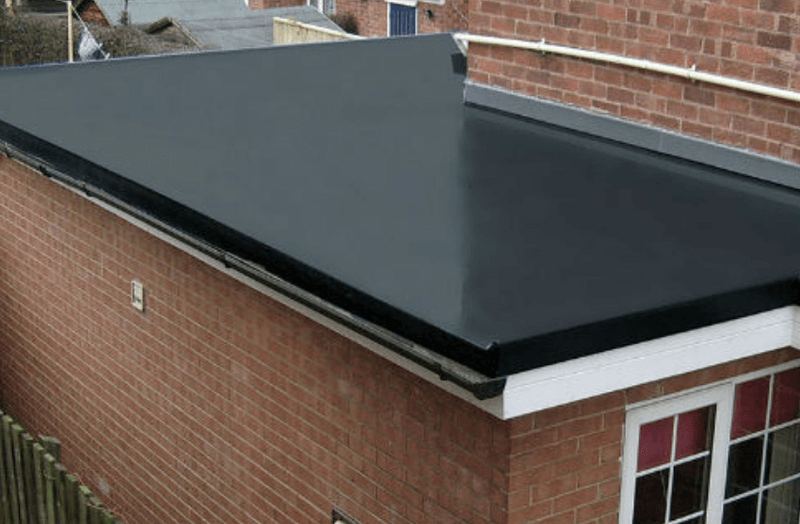
Propane cylinders stored upright and secured, CERTA open-flame guidelines followed, fire watch periods maintained, and torch-free systems installed where codes require.
When It Makes Sense
Signs Modified Bitumen Is the Right System
Alligatoring on Aged Asphalt
A cracked, scaly surface means the asphalt has oxidized and lost its plasticizers. The membrane turns brittle, splits, and lets water reach the insulation. A new modified system restores flexibility and waterproofing.
Blistering and Delamination
Trapped moisture between plies expands in summer heat and forms raised blisters. Once they rupture, water infiltrates the assembly. Beyond isolated areas, spot repairs won't hold.
Ponding Water That Won't Drain
Standing water past 48 hours degrades membranes and voids many warranties. We correct drainage with tapered insulation during installation, directing runoff toward scuppers and internal drains.
Failed Flashings at Penetrations and Parapets
Pipe boots, curb flashings, and parapet terminations fail before field membranes do. Rusted counterflashing and separated base flashing mean leaks follow — our installations reflash every detail with reinforced plies.
Recurring Interior Leaks
Stained ceiling tiles, damp insulation, and musty odors signal an assembly that's absorbed moisture. Infrared scans confirm the extent — and saturated insulation's lost R-value means a dry new system pays for itself in energy savings.
Rooftop equipment traffic beating up your membrane? Price the multi-ply answer.
How We Work
Our Modified Bitumen Process
01
Inspection and Moisture Survey
Deck examined, existing assembly core-sampled, infrared scans run to map wet insulation — this determines tear-off versus recover.
02
Substrate Preparation
Saturated materials removed, decking repaired, cover board or tapered insulation installed and fastened per your wind-uplift zone.
03
Base Sheet Application
Base ply attached with fasteners, cold adhesive, or self-adhering backing — the anchor for the entire system.
04
Interply and Cap Sheet
Torch, hot-mop, or cold-applied per spec, each course rolled with proper side and end laps — bleed-out at every seam confirms full adhesion.
05
Flashing and Details
Penetrations, curbs, and parapets flashed with reinforced membrane plies; metal edge terminations and counterflashing installed.
06
Final Inspection and Registration
Every seam and detail checked, manufacturer warranty registered, photos and maintenance guidance delivered before we leave.
Fire watches after every torch day; watertight at the end of every shift.
Brands We Use
SBS and APP Systems We Install
GAF
Ruberoid SBS and APP membrane systems
CertainTeed
Flintlastic self-adhering and torch-down sheets
Johns Manville
DynaGlas and DynaLastic reinforced membranes
Siplast
Paradiene SBS two-ply systems
Polyglass
Elastoflex and Polyflex with ADESO self-adhered technology
SOPREMA
Elastophene and Sopralene SBS membranes
Firestone (Elevate)
SBS modified bitumen assemblies
TAMKO
Awaplan premium SBS sheets
IKO
Torchflex and Modiflex commercial membranes
Karnak
Cold-process adhesives, mastics, and flashing cements
OSHA fall protection, staged extinguishers at torch stations, documented substrate checks before ignition, and evening fire watches — flame respected, never feared.
FAQs
FAQs About Modified Bitumen
›What is modified bitumen installation?
Modified bitumen installation is the process of applying asphalt membranes reinforced with polymers, either SBS rubber or APP plastic, to flat and low-slope roofs. Installers layer base sheets and cap sheets to build a multi-ply waterproof assembly.
›How does modified bitumen installation work?
Crews prepare the substrate, attach a base ply, then bond the cap sheet using torch application, hot asphalt, cold adhesive, or self-adhering backing. Each course overlaps the previous one, and heat or adhesive fuses the seams into a continuous membrane.
›When should I replace my modified bitumen roof?
Replace it when you see widespread alligatoring, ruptured blisters, saturated insulation, or leaks that return after repairs. Most systems last 20 years, though ponding water and deferred maintenance shorten that lifespan.
›Why choose modified bitumen over single-ply membranes?
Modified bitumen offers greater puncture resistance, redundant plies, and easier repairs. Roofs with heavy equipment traffic or frequent maintenance access benefit from its thickness and tear strength.
›Can modified bitumen be installed without a torch?
Yes. Self-adhered and cold-applied systems eliminate open flames entirely, which suits occupied buildings, schools, and structures with combustible decks.
›Does modified bitumen installation come with a warranty?
Certified installations qualify for No-Dollar-Limit manufacturer system warranties up to 20 years, plus our own labor warranty — 3 years on commercial systems, 10 years on residential low-slope.
Related Services
Layered Deep. Torched Safe. Built for Traffic.
SBS & APP · Torch-free options · 20-year system warranties